Vitali: The first 30 days make all the difference
A mobile app designed to provide intensive support to chronic patients during the first 30 days after a diabetes diagnosis, the most critical and vulnerable window in their treatment journey.
MY ROLE
UX/UI Designer
TEAM
JRG.
multidisciplinary team of 3 people
TIMELINE
hackathon RIMAC
21 - 23 november
TOOLS

BEHIND THE PROBLEM
A diagnosis doesn't end at the doctor's office. It starts there.
2.6M
people over 18 live with diabetes in Peru
30%
maintain adequate control of the disease
6,000
The first 30 days after diagnosis concentrate the highest levels of emotional shock, confusion and treatment abandonment. It's the moment patients are most vulnerable and most alone.
RIMAC had 6,000 patients with diabetes and no solution to accompany them through that critical window.
What wasn't working
The healthcare system treats the diagnosis, not the person receiving it.
No emotional support
Patients leave the consultation alone with a life-changing diagnosis and no guidance on what comes next.
Information overload
Too much clinical information at once, with no personalization or pacing for the patient's emotional state.
No continuity
Follow-up was limited to scheduled appointments, leaving gaps during the most vulnerable days.
RIMAC had no tool to support its chronic patients during this critical period.
No digital solution
How we got there
A solution built on real data about a real problem.
Research
Grounded in secondary data from the Instituto Nacional de Salud (INS) and internal RIMAC data. Target audience defined as RIMAC affiliates aged 18–50 with a recent chronic disease diagnosis.
The 3-phase model
The core structure of Vitali was built around three stages of the post-diagnosis journey:
Survival
The immediate days after diagnosis: emotional stabilization, basic guidance and clarity on what to do first.
Building
Establishing habits such as medication reminders, nutrition guidance and small achievable goals to build consistency.
Confidence
The patient gains autonomy, tracking progress, understanding their own patterns and feeling in control of their health.
Visual Identity & Branding
Proposed and designed the complete visual direction of the product, including the brand mascot "Vita", a hummingbird chosen for its symbolism of resilience and vitality, the color palette and the overall visual tone of the app.
The thinking behind the design
Every decision had a reason. These were the most defining moments.
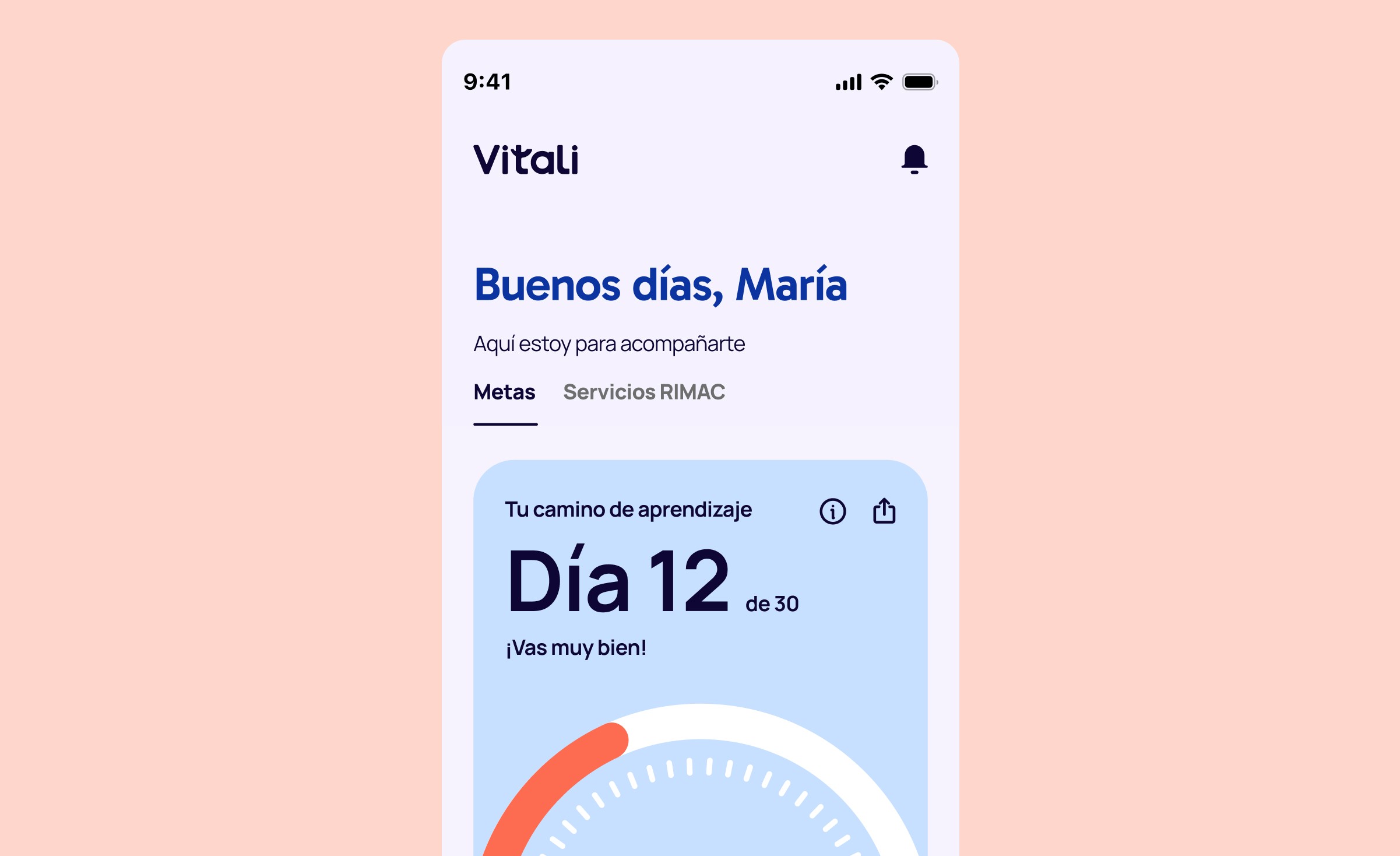
Empathy first, information second
The first screen a newly diagnosed patient sees can't be a dashboard of clinical data. The design prioritizes emotional acknowledgment before guidance, meeting the user where they are emotionally, not where the system expects them to be.

A mascot as a trust mechanism
Vita the hummingbird wasn't a decorative choice, it was a deliberate decision to humanize the experience. A familiar, friendly presence that accompanies the patient reduces anxiety and increases engagement, especially during the most vulnerable days.

Progressive disclosure of information
Instead of overwhelming users with everything at once, information is paced according to the patient's stage: survival, building or confidence. What they see adapts to where they are in their journey.

Scalability built into the structure
The 3-phase model was designed not just for the first 30 days but as a foundation that could expand into long-term chronic disease management, making the product viable beyond the initial use case.
What we built
A product concept with real viability, built to scale beyond day 30.
Key features
30-Day Kit
Structured program across 3 phases: Survival, Building and Confidence, guiding the patient step by step through the most critical month

Emotional Support with Vita
Empathetic messages from the mascot, depression detection alerts and exercises adapted to the patient's work environment

Smart Reminders & Micro-lessons
Intelligent medication reminders, 2–3 minute daily educational content and practical meal guidance. all paced to the patient's phase

RIMAC Benefits Management
Full catalog of chronic care benefits, specialist scheduling, medication renewal reminders and benefit usage tracking

What I'd do differently
What this project taught me about designing for real human vulnerability.
Next time
Conduct primary research with real patients, not just secondary data. Understanding the emotional nuances of a post-diagnosis experience firsthand would strengthen every design decision in the product.
Next steps
User testing with RIMAC patients
Validation of the 3-phase model
Iteration on the Rescue Mode flow
Integration with RIMAC's existing health platform.