Mind: Conscious Digital Habits
A native mobile app with AI that helps university students understand and manage their digital habits, not just how much time they spend on their phone, but why, and what to do about it.
MY ROLE
UX/UI Designer
TEAM
SintonIA.
MULTIDISCPLINARY TEAM OF 4 PEOPLE.
TIMELINE
28h by digieduhack
8 - 9 november
TOOLS

BEHIND THE PROBLEM
University students know they're on their phones too much. They just don't know how to stop.
5h+
average daily screen time for university students (2025)
57%
admit to feeling addicted to their phone
88%
don't use native screen control tools available on their devices
The impact on mental health and academic performance is well documented — but existing solutions only measure screen time. They don't address the why behind compulsive use, and they don't offer meaningful guidance on what to do differently.
The problem isn't the phone. It's the unconscious patterns we've built around it.
What wasn't working
Native tools exist, but almost nobody uses them.
Quantity over quality
Screen Time and Digital Wellbeing measure hours, not what those hours are doing to you
No behavioral insight
They show data without context, leaving users with numbers but no understanding
No personalization
One-size-fits-all limits don't account for different usage patterns, needs or emotional triggers
When a user is struggling, there's no path to professional help built into the experience
No support system
How we got there
28 hours to go from insight to a working product concept.
Research
Grounded in 2025 data on digital behavior, mental health, and the wellness app market. A competitive analysis of native tools such as Screen Time (iOS) and Digital Wellbeing (Android) helped identify the gaps that Mind was designed to fill.
The problem
university students nationwide
1.2M
SUNEDU
2023
university students suffer severe anxiety
4/10
Consorcio Universidades
2025
28.5%
prevalence of anxiety among Peruvian university students
UNFV
2024
The pivot
Mid-hackathon course correction
The original concept was a Chrome extension. Midway through the 28 hours, our mentor identified a structural problem: 86.3% of extensions have fewer than 1,000 users and 80% of screen time happens on mobile, not desktop. The pivot to a native mobile app was the right call. With time running out, I proposed the complete visual direction and product design of the new concept and executed the full prototype from scratch.
The thinking behind the design
Under pressure, every decision had to count.

Behavior over time
The core design principle was shifting the user's focus from "how long am I on my phone" to "what am I using it for and how does it make me feel." Every feature was built around that shift.
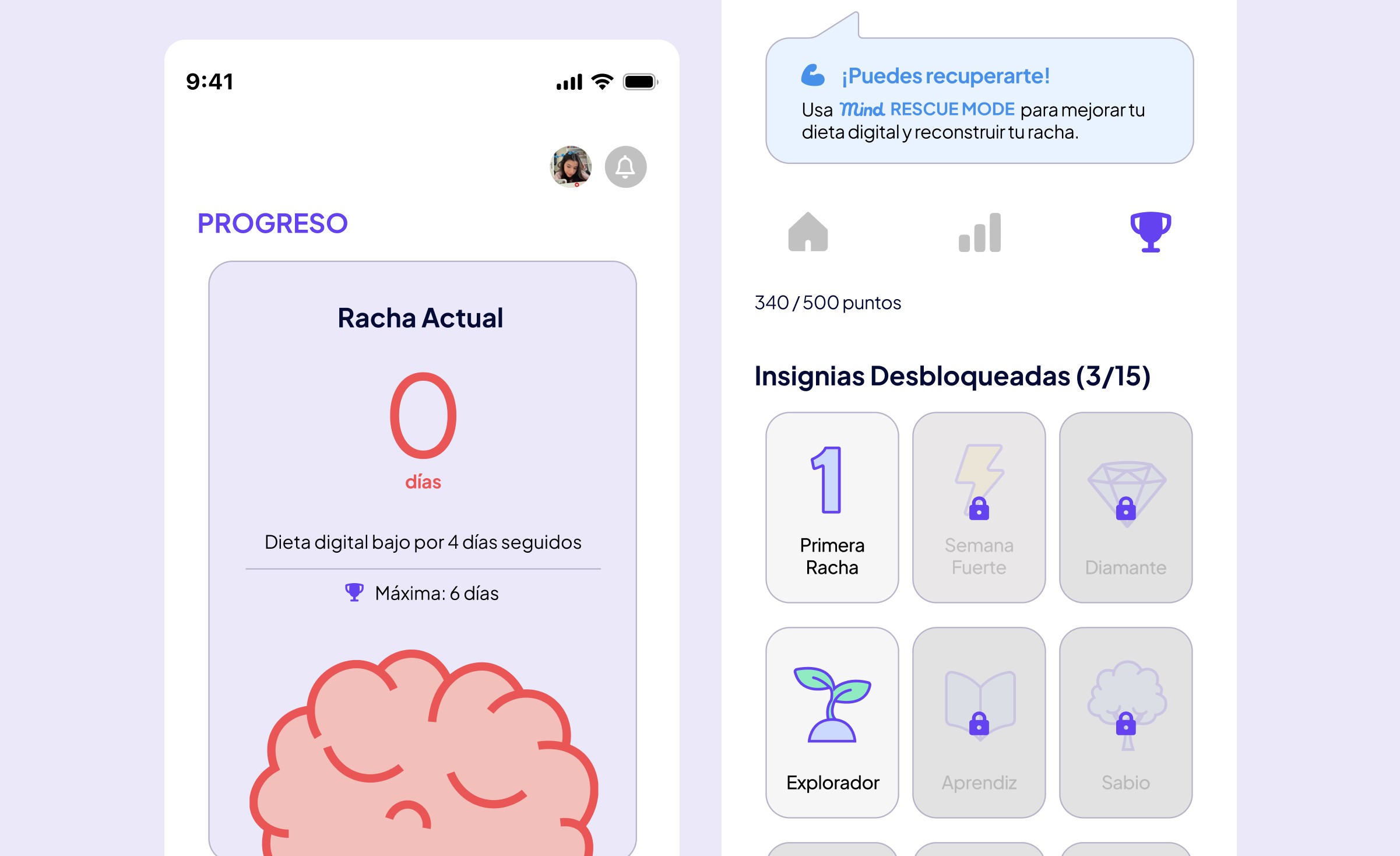
Gamification as positive reinforcement
Most screen time tools punish; they block, restrict and alert. Mind uses gamification differently: to reward conscious choices, not to punish compulsive ones. Progress, streaks and milestones reinforce healthy habits without making the user feel judged or controlled.

Rescue Mode as a safety net
When a user is in a moment of compulsive use or anxiety, they need more than a notification. Rescue Mode provides direct access to psychologists, not as a last resort, but as a built-in layer of care.

Visual calm in a noisy context
An app about reducing digital overwhelm can't feel overwhelming itself. The visual language was deliberately minimal, soft and spacious, designed to feel like a breath of fresh air compared to the apps competing for the user's attention.
What we built
A product concept that goes beyond screen time into the behavior behind it.
Key features
Content Wellness Score
A personalized metric that rates not just time spent, but the quality and emotional impact of digital consumption, helping users understand their patterns, not just measure them.

Smart Nudges with AI
Context-aware interventions that appear at the right moment, not random reminders, but intelligent suggestions based on the user's behavior patterns and emotional state.

Rescue Mode
Direct, one-tap access to licensed psychologists for moments of compulsive use, anxiety or digital overwhelm. Support built into the product, not tacked on as an afterthought.

What I'd do differently
What 28 hours taught me about designing under pressure.
The pivot was the project.
The mid-hackathon course correction felt like a crisis in the moment, but it pushed the team to build something sharper and more focused. Proposing the new visual direction and executing the full prototype in the remaining hours was the most intense design experience I've had. And one of the most clarifying.
Next time
Validate the core behavioral assumption earlier; do users actually want insight into their digital habits, or just control? That distinction would shape the entire feature set differently.
Next steps
User testing with university students
Behavioral validation of the Content Wellness Score
Partnerships with university mental health services
iOS and Android development.